中国沙漠 ›› 2026, Vol. 46 ›› Issue (5): 346-357.DOI: 10.7522/j.issn.1000-694X.2026.00027
• • 上一篇
王佳濛1( ), 郝龙飞1(), 刘婷岩2, 许吉康3, 张盛晰1, 杨海峰1()
收稿日期:2025-12-16
修回日期:2026-02-09
出版日期:2026-09-20
发布日期:2026-11-02
通讯作者:
郝龙飞,杨海峰
作者简介:王佳濛(1999—),女,内蒙古阿拉善左旗人,硕士研究生,研究方向为林木菌根生物技术。E-mail: 1430018901@qq.com
基金资助:
Jiameng Wang1(), Longfei Hao1(), Tingyan Liu2, Jikang Xu3, Shengxi Zhang1, Haifeng Yang1()
Received:2025-12-16
Revised:2026-02-09
Online:2026-09-20
Published:2026-11-02
Contact:
Longfei Hao, Haifeng Yang
摘要:
在半干旱区生态恢复中,灌木混交与丛枝菌根真菌(AMF)接种均是提升植被重建效果的重要措施,但协同增效机制尚不明晰。为探究半干旱区灌木混交模式与AMF接种对根围微生态环境及苗木生长的交互影响,本研究以灌木铁线莲(G)、蒙古扁桃(M)和土庄绣线菊(T)为对象,设置6种混交模式(G-M-T、M-G-T、G-T-M、T-G-M、M-T-G、T-M-G)与2种AMF处理(±AMF),共12种处理组合,测定土壤微生物生物量、球囊霉素相关土壤蛋白、有效养分及苗木形态与养分指标,并采用双因素方差分析、多元线性回归与偏最小二乘路径模型进行系统分析。结果表明:(1)混交模式与AMF接种对土壤微生境具有协同增效作用,M-G-T模式中,接菌下土壤微生物生物量磷比不接菌提高79.3%,G-M-T与M-T-G模式在接菌下易提取球囊霉素相关土壤蛋白显著增加;(2)苗木根系形态表现出显著可塑性,G-M-T与M-G-T模式中,接菌下比根长与比表面积分别比不接菌提高386.8%与440.0%;(3)土壤有效磷与可溶性有机碳是驱动根系构型与苗木质量的关键因子。路径分析进一步表明,AMF作为“系统调节器”,通过改善微生物群落与微生境间接促进苗木生长。
中图分类号:
王佳濛, 郝龙飞, 刘婷岩, 许吉康, 张盛晰, 杨海峰. 混交模式与丛枝菌根真菌接种对半干旱区灌木生长的协同效应[J]. 中国沙漠, 2026, 46(5): 346-357.
Jiameng Wang, Longfei Hao, Tingyan Liu, Jikang Xu, Shengxi Zhang, Haifeng Yang. Synergistic effects of mixed planting patterns and arbuscular mycorrhizal fungi inoculation on the growth of shrubs in semi-arid regions[J]. Journal of Desert Research, 2026, 46(5): 346-357.
| 混交模式 | 接菌处理 | 微生物生物量C/(mg·kg-1) | 微生物生物量N/(mg·kg-1) | 微生物生物量P/(mg·kg-1) |
|---|---|---|---|---|
| G-M-T | -AMF | 66.19±14.90Aa | 8.82±3.71ABa | 118.86±10.72Ba |
| +AMF | 76.45±23.97Aa | 10.91±3.42Aa | 77.29±7.08BCb | |
| M-G-T | -AMF | 67.78±15.13Aa | 11.63±2.54Aa | 62.54±20.03Db |
| +AMF | 74.52±20.75Aa | 12.25±2.55Aa | 112.14±23.38Aa | |
| G-T-M | -AMF | 59.56±25.63Aa | 7.20±1.64Ba | 141.47±30.05Aa |
| +AMF | 59.84±10.21Aa | 8.85±2.43ABa | 91.59±11.63Bb | |
| T-G-M | -AMF | 71.72±17.12Aa | 11.56±3.79Aa | 99.27±21.57Cb |
| +AMF | 63.10±60.54Aa | 7.05±6.45Ba | 126.59±23.05Aa | |
| M-T-G | -AMF | 66.39±15.52Aa | 10.37±2.70Aa | 120.72±8.98Ba |
| +AMF | 69.36±24.20Aa | 10.78±2.72Aa | 72.86±8.24Cb | |
| T-M-G | -AMF | 69.91±22.31Aa | 11.62±1.96Aa | 88.02±15.24Ca |
| +AMF | 78.94±29.97Aa | 11.01±3.30Aa | 88.58±8.57Ba | |
| 混交模式 | NS | ** | *** | |
| 接菌处理 | NS | NS | ** | |
| 混交模式×接菌处理 | NS | * | *** | |
表1 混交模式和接菌处理对土壤微生物生物量的影响
Table 1 Effects of mixed planting patterns and inoculation treatments on soil microbial biomass
| 混交模式 | 接菌处理 | 微生物生物量C/(mg·kg-1) | 微生物生物量N/(mg·kg-1) | 微生物生物量P/(mg·kg-1) |
|---|---|---|---|---|
| G-M-T | -AMF | 66.19±14.90Aa | 8.82±3.71ABa | 118.86±10.72Ba |
| +AMF | 76.45±23.97Aa | 10.91±3.42Aa | 77.29±7.08BCb | |
| M-G-T | -AMF | 67.78±15.13Aa | 11.63±2.54Aa | 62.54±20.03Db |
| +AMF | 74.52±20.75Aa | 12.25±2.55Aa | 112.14±23.38Aa | |
| G-T-M | -AMF | 59.56±25.63Aa | 7.20±1.64Ba | 141.47±30.05Aa |
| +AMF | 59.84±10.21Aa | 8.85±2.43ABa | 91.59±11.63Bb | |
| T-G-M | -AMF | 71.72±17.12Aa | 11.56±3.79Aa | 99.27±21.57Cb |
| +AMF | 63.10±60.54Aa | 7.05±6.45Ba | 126.59±23.05Aa | |
| M-T-G | -AMF | 66.39±15.52Aa | 10.37±2.70Aa | 120.72±8.98Ba |
| +AMF | 69.36±24.20Aa | 10.78±2.72Aa | 72.86±8.24Cb | |
| T-M-G | -AMF | 69.91±22.31Aa | 11.62±1.96Aa | 88.02±15.24Ca |
| +AMF | 78.94±29.97Aa | 11.01±3.30Aa | 88.58±8.57Ba | |
| 混交模式 | NS | ** | *** | |
| 接菌处理 | NS | NS | ** | |
| 混交模式×接菌处理 | NS | * | *** | |
| 混交模式 | 接菌处理 | 易提取球囊霉素相关土壤蛋白/(mg·g-1) | 总球囊霉素相关土壤蛋白/(mg·g-1) |
|---|---|---|---|
| G-M-T | -AMF | 268.61±10.72Cb | 1565.03±142.74Db |
| +AMF | 330.29±40.01Aa | 1734.20±125.28Aa | |
| M-G-T | -AMF | 324.11±21.43Aa | 1887.86±132.86Aa |
| +AMF | 342.87±25.74Aa | 1823.85±100.81Aa | |
| G-T-M | -AMF | 271.06±27.41Ca | 1648.39±120.86CDb |
| +AMF | 310.52±62.24Aa | 1790.16±105.14Aa | |
| T-G-M | -AMF | 328.19±31.95Aa | 1893.69±104.44Aa |
| +AMF | 321.95±52.92Aa | 1784.45±106.55Ab | |
| M-T-G | -AMF | 287.32±47.95BCb | 1808.93±183.37ABa |
| +AMF | 325.21±15.84Aa | 1711.81±160.48Aa | |
| T-M-G | -AMF | 300.62±21.28ABa | 1703.54±119.27BCa |
| +AMF | 310.81±40.34Aa | 1690.01±149.41Aa | |
| 混交模式 | ** | *** | |
| 接菌处理 | *** | NS | |
| 混交模式×接菌处理 | NS | ** | |
表2 混交模式和接菌处理对球囊霉素相关土壤蛋白的影响
Table 2 Effects of mixed planting patterns and inoculation treatments on glomalin-related soil protein
| 混交模式 | 接菌处理 | 易提取球囊霉素相关土壤蛋白/(mg·g-1) | 总球囊霉素相关土壤蛋白/(mg·g-1) |
|---|---|---|---|
| G-M-T | -AMF | 268.61±10.72Cb | 1565.03±142.74Db |
| +AMF | 330.29±40.01Aa | 1734.20±125.28Aa | |
| M-G-T | -AMF | 324.11±21.43Aa | 1887.86±132.86Aa |
| +AMF | 342.87±25.74Aa | 1823.85±100.81Aa | |
| G-T-M | -AMF | 271.06±27.41Ca | 1648.39±120.86CDb |
| +AMF | 310.52±62.24Aa | 1790.16±105.14Aa | |
| T-G-M | -AMF | 328.19±31.95Aa | 1893.69±104.44Aa |
| +AMF | 321.95±52.92Aa | 1784.45±106.55Ab | |
| M-T-G | -AMF | 287.32±47.95BCb | 1808.93±183.37ABa |
| +AMF | 325.21±15.84Aa | 1711.81±160.48Aa | |
| T-M-G | -AMF | 300.62±21.28ABa | 1703.54±119.27BCa |
| +AMF | 310.81±40.34Aa | 1690.01±149.41Aa | |
| 混交模式 | ** | *** | |
| 接菌处理 | *** | NS | |
| 混交模式×接菌处理 | NS | ** | |
| 混交模式 | 接菌处理 | 可溶性有机碳/(mg·g-1) | 土壤有效氮/(mg·kg-1) | 土壤有效磷/(mg·kg-1) |
|---|---|---|---|---|
| G-M-T | -AMF | 3.14±0.52Aa | 10.72±0.61ABa | 12.71±2.55Bb |
| +AMF | 3.62±0.54Aa | 10.84±4.00Aa | 16.54±4.46ABa | |
| M-G-T | -AMF | 3.04±0.49Aa | 9.91±3.19Ba | 18.89±9.75ABa |
| +AMF | 3.34±0.71Aa | 10.67±1.78Aa | 18.41±10.60ABa | |
| G-T-M | -AMF | 2.89±0.52Aa | 9.58±2.03BCa | 11.79±7.54Ba |
| +AMF | 2.96±0.49Aa | 7.26±2.17Bb | 14.57±4.03Ba | |
| T-G-M | -AMF | 3.03±0.38Aa | 12.18±1.88Aa | 21.90±14.01ABa |
| +AMF | 1.84±1.43Bb | 10.92±3.11Aa | 21.90±7.02Aa | |
| M-T-G | -AMF | 3.25±0.71Aa | 7.54±2.71CDa | 11.49±3.96Ba |
| +AMF | 3.30±0.67Aa | 9.84±2.87ABa | 14.70±5.96Ba | |
| T-M-G | -AMF | 3.36±0.95Aa | 7.18±1.61Db | 28.53±19.54Aa |
| +AMF | 3.17±0.59Aa | 10.73±2.36Aa | 14.87±5.40Ba | |
| 混交模式 | *** | *** | ** | |
| 接菌处理 | NS | NS | NS | |
| 混交模式×接菌处理 | * | ** | * | |
表3 混交模式和接菌处理对土壤有效养分的影响
Table 3 Effects of mixed planting patterns and inoculation treatments on soil available nutrients
| 混交模式 | 接菌处理 | 可溶性有机碳/(mg·g-1) | 土壤有效氮/(mg·kg-1) | 土壤有效磷/(mg·kg-1) |
|---|---|---|---|---|
| G-M-T | -AMF | 3.14±0.52Aa | 10.72±0.61ABa | 12.71±2.55Bb |
| +AMF | 3.62±0.54Aa | 10.84±4.00Aa | 16.54±4.46ABa | |
| M-G-T | -AMF | 3.04±0.49Aa | 9.91±3.19Ba | 18.89±9.75ABa |
| +AMF | 3.34±0.71Aa | 10.67±1.78Aa | 18.41±10.60ABa | |
| G-T-M | -AMF | 2.89±0.52Aa | 9.58±2.03BCa | 11.79±7.54Ba |
| +AMF | 2.96±0.49Aa | 7.26±2.17Bb | 14.57±4.03Ba | |
| T-G-M | -AMF | 3.03±0.38Aa | 12.18±1.88Aa | 21.90±14.01ABa |
| +AMF | 1.84±1.43Bb | 10.92±3.11Aa | 21.90±7.02Aa | |
| M-T-G | -AMF | 3.25±0.71Aa | 7.54±2.71CDa | 11.49±3.96Ba |
| +AMF | 3.30±0.67Aa | 9.84±2.87ABa | 14.70±5.96Ba | |
| T-M-G | -AMF | 3.36±0.95Aa | 7.18±1.61Db | 28.53±19.54Aa |
| +AMF | 3.17±0.59Aa | 10.73±2.36Aa | 14.87±5.40Ba | |
| 混交模式 | *** | *** | ** | |
| 接菌处理 | NS | NS | NS | |
| 混交模式×接菌处理 | * | ** | * | |
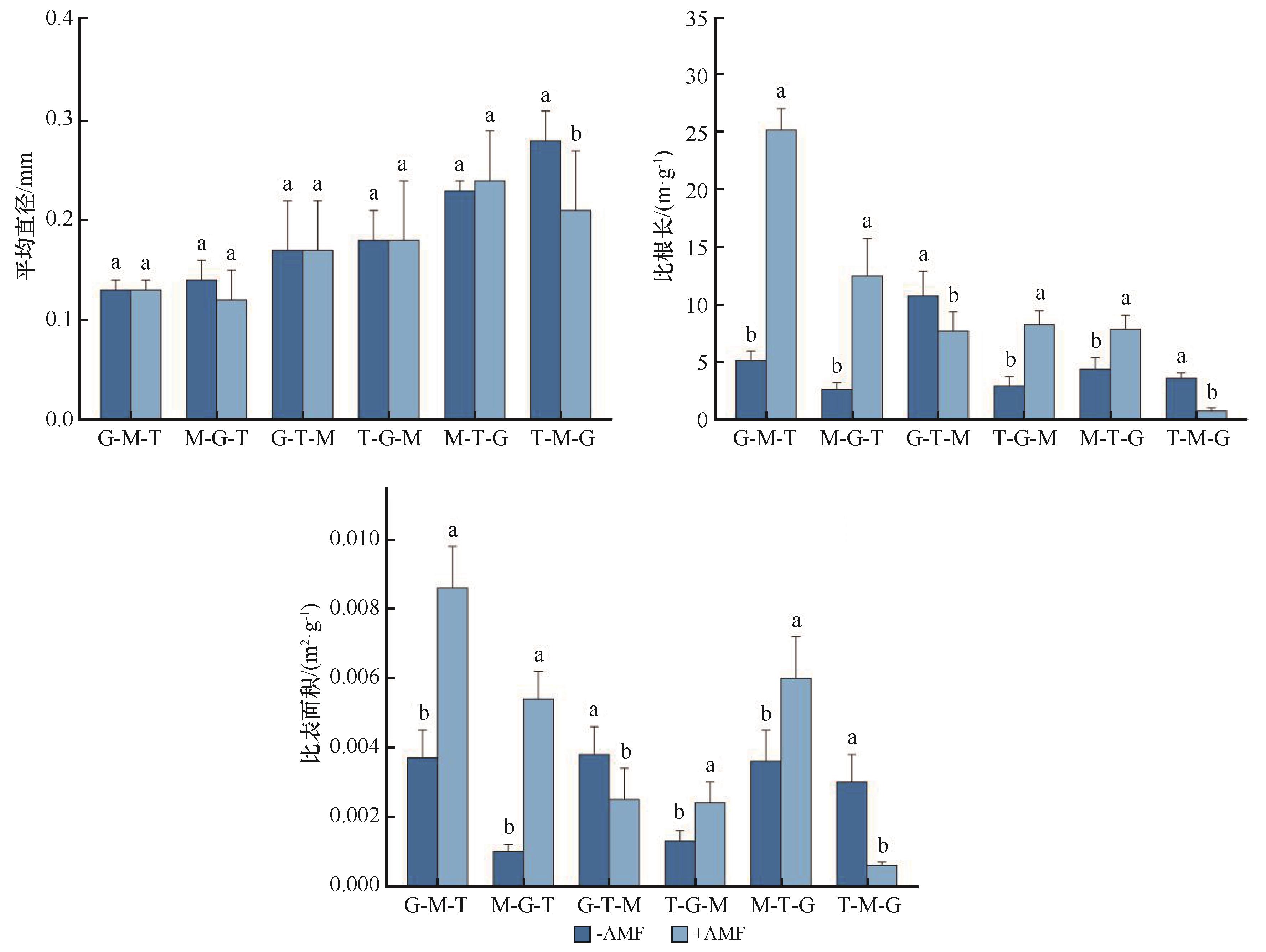
图1 混交模式下接菌处理对苗木细根根系形态的影响注:图中G、M、T分别代表灌木铁线莲、蒙古扁桃、土庄绣线菊3种灌木,其字母先后顺序代表不同的混交模式,其中前两个字母表示前期栽植组合,第三个字母表示在其基础上新栽植灌木树种。-AMF、+AMF分别代表不接菌处理和接菌处理。各处理的苗木细根根系形态数值以第三年种植的1年生苗木相关指标进行分析。不同小写字母表示相同混交模式下接菌处理间差异显著。
Fig.1 Effects of inoculation treatments under mixed planting patterns on the morphology of fine roots of seedlings
| 混交模式 | 接菌处理 | 碳浓度/(g·kg-1) | 氮浓度/(g·kg-1) | 磷浓度/(g·kg-1) |
|---|---|---|---|---|
| G-M-T | -AMF | 442.18±8.88a | 11.33±0.72a | 2.99±0.96a |
| +AMF | 424.85±17.63b | 11.60±0.33a | 3.00±0.68a | |
| M-G-T | -AMF | 415.85±5.82a | 11.33±1.53a | 3.10±1.05a |
| +AMF | 426.38±14.80a | 12.30±2.53a | 2.65±0.57a | |
| G-T-M | -AMF | 464.78±5.63a | 7.92±0.95a | 1.85±0.59a |
| +AMF | 460.00±9.79a | 7.02±0.50b | 1.86±0.45a | |
| T-G-M | -AMF | 457.73±5.84b | 6.47±0.75a | 2.50±0.71a |
| +AMF | 468.85±8.80a | 6.63±0.90a | 2.51±0.86a | |
| M-T-G | -AMF | 440.77±13.18a | 11.15±3.90a | 1.78±0.55a |
| +AMF | 447.12±7.82a | 10.62±1.53a | 1.61±0.30a | |
| T-M-G | -AMF | 437.75±5.65a | 11.48±2.43a | 1.67±0.31a |
| +AMF | 439.42±4.77a | 10.88±1.74a | 1.96±0.55a |
表4 混交模式下接菌处理对苗木养分浓度的影响
Table 4 Effects of inoculation treatments on nutrient concentrations in seedlings under mixed planting patterns
| 混交模式 | 接菌处理 | 碳浓度/(g·kg-1) | 氮浓度/(g·kg-1) | 磷浓度/(g·kg-1) |
|---|---|---|---|---|
| G-M-T | -AMF | 442.18±8.88a | 11.33±0.72a | 2.99±0.96a |
| +AMF | 424.85±17.63b | 11.60±0.33a | 3.00±0.68a | |
| M-G-T | -AMF | 415.85±5.82a | 11.33±1.53a | 3.10±1.05a |
| +AMF | 426.38±14.80a | 12.30±2.53a | 2.65±0.57a | |
| G-T-M | -AMF | 464.78±5.63a | 7.92±0.95a | 1.85±0.59a |
| +AMF | 460.00±9.79a | 7.02±0.50b | 1.86±0.45a | |
| T-G-M | -AMF | 457.73±5.84b | 6.47±0.75a | 2.50±0.71a |
| +AMF | 468.85±8.80a | 6.63±0.90a | 2.51±0.86a | |
| M-T-G | -AMF | 440.77±13.18a | 11.15±3.90a | 1.78±0.55a |
| +AMF | 447.12±7.82a | 10.62±1.53a | 1.61±0.30a | |
| T-M-G | -AMF | 437.75±5.65a | 11.48±2.43a | 1.67±0.31a |
| +AMF | 439.42±4.77a | 10.88±1.74a | 1.96±0.55a |
| 混交模式 | 接菌处理 | 苗高/cm | 地径/mm |
|---|---|---|---|
| G-M-T | -AMF | 21.44±6.56a | 3.09±1.10a |
| +AMF | 15.55±3.74b | 2.11±1.13a | |
| M-G-T | -AMF | 24.34±4.05a | 3.66±1.41a |
| +AMF | 21.81±10.54a | 3.68±2.20a | |
| G-T-M | -AMF | 62.84±14.44a | 8.63±1.24a |
| +AMF | 62.31±13.26a | 8.02±1.37a | |
| T-G-M | -AMF | 29.31±11.65a | 4.92±1.17a |
| +AMF | 32.92±6.59a | 4.69±1.07a | |
| M-T-G | -AMF | 62.44±7.49a | 7.68±1.98a |
| +AMF | 59.87±7.28a | 7.56±1.60a | |
| T-M-G | -AMF | 40.13±5.49a | 5.06±0.54a |
| +AMF | 42.93±9.07a | 5.73±0.93a |
表5 混交模式下接菌处理对苗木苗高和地径的影响
Table 5 Effects of inoculation treatments on the height and ground diameter of seedlings under mixed planting patterns
| 混交模式 | 接菌处理 | 苗高/cm | 地径/mm |
|---|---|---|---|
| G-M-T | -AMF | 21.44±6.56a | 3.09±1.10a |
| +AMF | 15.55±3.74b | 2.11±1.13a | |
| M-G-T | -AMF | 24.34±4.05a | 3.66±1.41a |
| +AMF | 21.81±10.54a | 3.68±2.20a | |
| G-T-M | -AMF | 62.84±14.44a | 8.63±1.24a |
| +AMF | 62.31±13.26a | 8.02±1.37a | |
| T-G-M | -AMF | 29.31±11.65a | 4.92±1.17a |
| +AMF | 32.92±6.59a | 4.69±1.07a | |
| M-T-G | -AMF | 62.44±7.49a | 7.68±1.98a |
| +AMF | 59.87±7.28a | 7.56±1.60a | |
| T-M-G | -AMF | 40.13±5.49a | 5.06±0.54a |
| +AMF | 42.93±9.07a | 5.73±0.93a |
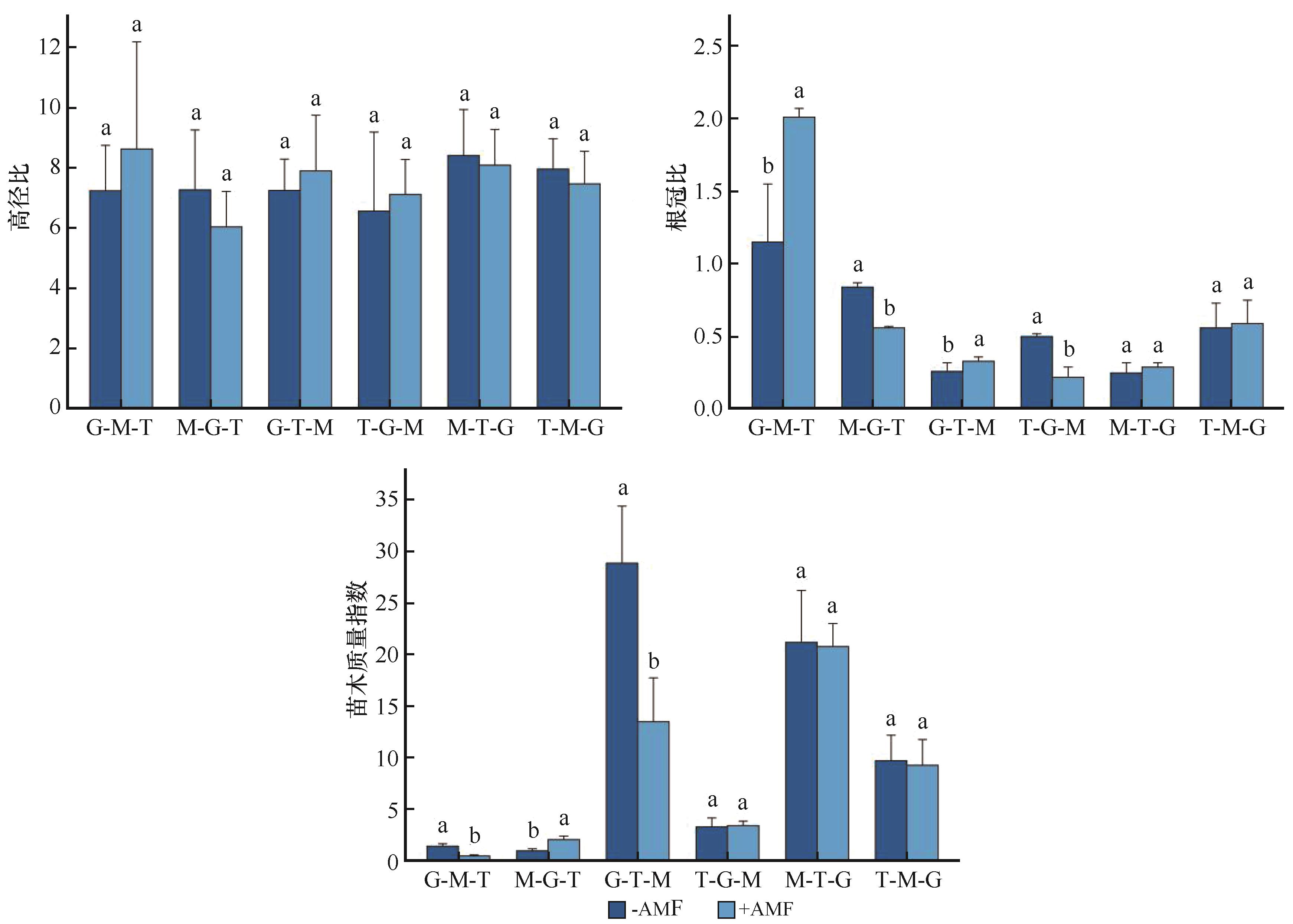
图2 混交模式下接菌处理对苗木综合质量指标的影响注:图中G、M、T分别代表灌木铁线莲、蒙古扁桃、土庄绣线菊3种灌木,其字母先后顺序代表不同的混交模式,其中前两个字母表示前期栽植组合,第三个字母表示在其基础上新栽植灌木树种。-AMF、+AMF分别代表不接菌处理和接菌处理。各处理的苗木细根根系形态数值以第三年种植的1年生苗木相关指标进行分析。不同小写字母表示相同混交模式下接菌处理间差异显著。
Fig.2 Effects of inoculation treatments under mixed planting patterns on the comprehensive quality indicators of seedlings
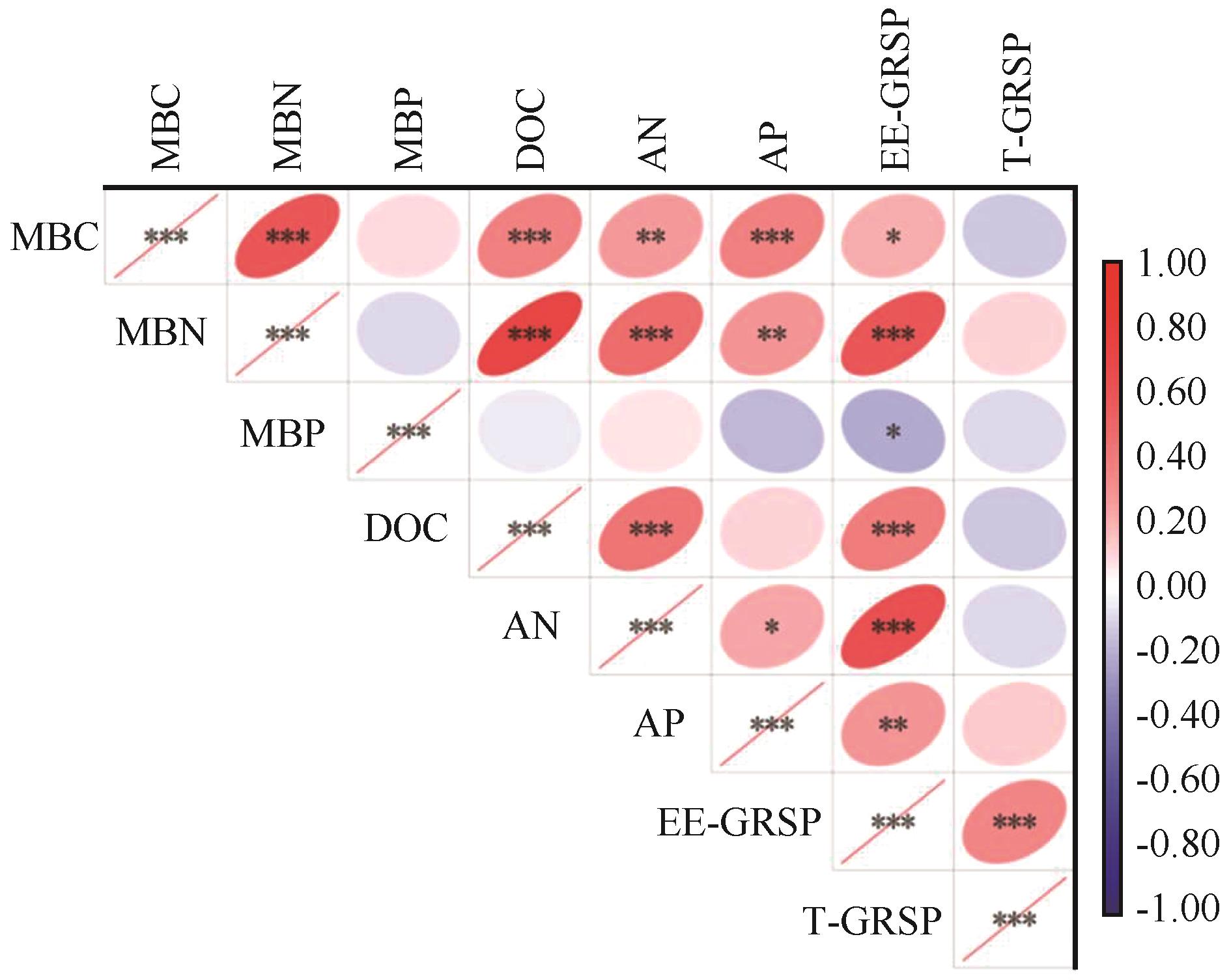
图3 苗木根围土壤微生物与土壤微生境相关因子的相关性分析注:图中MBC、MBN、MBP、DOC、AN、AP、EE-GRSP、T-GRSP分别代表微生物生物量碳、微生物生物量氮、微生物生物量磷、可溶性有机碳、有效氮、有效磷、易提取球囊霉素相关土壤蛋白和总球囊霉素相关土壤蛋白。
Fig.3 Correlation analysis of rhizosphere soil microorganisms and soil microhabitat related factors of seedlings
| 因变量 | 参数 | 系数估计值 | 标准化回归系数 | t | P |
|---|---|---|---|---|---|
| AD | 常量 | 0.225 | 10.239 | <0.01 | |
| MBC | -0.001 | -0.357 | -3.132 | <0.01 | |
| MBN | 0.004 | 0.259 | 2.158 | <0.05 | |
| AN | -0.006 | -0.301 | -2.972 | <0.01 | |
| AP | 0.002 | 0.313 | 3.232 | <0.01 | |
| SRL | 常量 | -6.861 | -1.381 | >0.05 | |
| MBN | -0.687 | -0.383 | -2.552 | <0.05 | |
| DOC | 2.505 | 0.313 | 2.370 | <0.05 | |
| EE-GRSP | 0.044 | 0.287 | 2.495 | <0.05 | |
| SSA | 常量 | 0.001 | 1.241 | >0.05 | |
| DOC | 0.001 | 0.271 | 2.898 | <0.01 | |
| SH | 常量 | 37.874 | 4.372 | <0.01 | |
| MBP | 0.174 | 0.254 | 2.755 | <0.01 | |
| AN | -1.595 | -0.234 | -2.532 | <0.05 | |
| GD | 常量 | -0.089 | -0.042 | >0.05 | |
| MBP | 0.033 | 0.387 | 4.010 | <0.01 | |
| AN | -0.241 | -0.281 | -2.321 | <0.05 | |
| EE-GRSP | 0.015 | 0.248 | 2.007 | <0.05 | |
| HDR | 常量 | 7.981 | 12.460 | <0.01 | |
| MBN | 0.194 | 0.374 | 3.697 | <0.01 | |
| AN | -0.251 | -0.385 | -3.805 | <0.01 | |
| RSR | 常量 | 0.515 | 2.027 | <0.05 | |
| MBP | -0.004 | -0.231 | -2.544 | <0.05 | |
| DOC | 0.174 | 0.272 | 2.990 | <0.01 | |
| SQI | 常量 | 2.018 | 0.429 | >0.05 | |
| MBP | 0.121 | 0.359 | 4.121 | <0.01 | |
| DOC | 2.644 | 0.221 | 2.299 | <0.05 | |
| AN | -1.297 | -0.385 | -3.992 | <0.01 |
表6 苗木形态构建与土壤微生境相关因子的多元线性回归分析
Table 6 Multivariate linear regression analysis of the morphological construction of seedlings and soil microhabitat related factors
| 因变量 | 参数 | 系数估计值 | 标准化回归系数 | t | P |
|---|---|---|---|---|---|
| AD | 常量 | 0.225 | 10.239 | <0.01 | |
| MBC | -0.001 | -0.357 | -3.132 | <0.01 | |
| MBN | 0.004 | 0.259 | 2.158 | <0.05 | |
| AN | -0.006 | -0.301 | -2.972 | <0.01 | |
| AP | 0.002 | 0.313 | 3.232 | <0.01 | |
| SRL | 常量 | -6.861 | -1.381 | >0.05 | |
| MBN | -0.687 | -0.383 | -2.552 | <0.05 | |
| DOC | 2.505 | 0.313 | 2.370 | <0.05 | |
| EE-GRSP | 0.044 | 0.287 | 2.495 | <0.05 | |
| SSA | 常量 | 0.001 | 1.241 | >0.05 | |
| DOC | 0.001 | 0.271 | 2.898 | <0.01 | |
| SH | 常量 | 37.874 | 4.372 | <0.01 | |
| MBP | 0.174 | 0.254 | 2.755 | <0.01 | |
| AN | -1.595 | -0.234 | -2.532 | <0.05 | |
| GD | 常量 | -0.089 | -0.042 | >0.05 | |
| MBP | 0.033 | 0.387 | 4.010 | <0.01 | |
| AN | -0.241 | -0.281 | -2.321 | <0.05 | |
| EE-GRSP | 0.015 | 0.248 | 2.007 | <0.05 | |
| HDR | 常量 | 7.981 | 12.460 | <0.01 | |
| MBN | 0.194 | 0.374 | 3.697 | <0.01 | |
| AN | -0.251 | -0.385 | -3.805 | <0.01 | |
| RSR | 常量 | 0.515 | 2.027 | <0.05 | |
| MBP | -0.004 | -0.231 | -2.544 | <0.05 | |
| DOC | 0.174 | 0.272 | 2.990 | <0.01 | |
| SQI | 常量 | 2.018 | 0.429 | >0.05 | |
| MBP | 0.121 | 0.359 | 4.121 | <0.01 | |
| DOC | 2.644 | 0.221 | 2.299 | <0.05 | |
| AN | -1.297 | -0.385 | -3.992 | <0.01 |
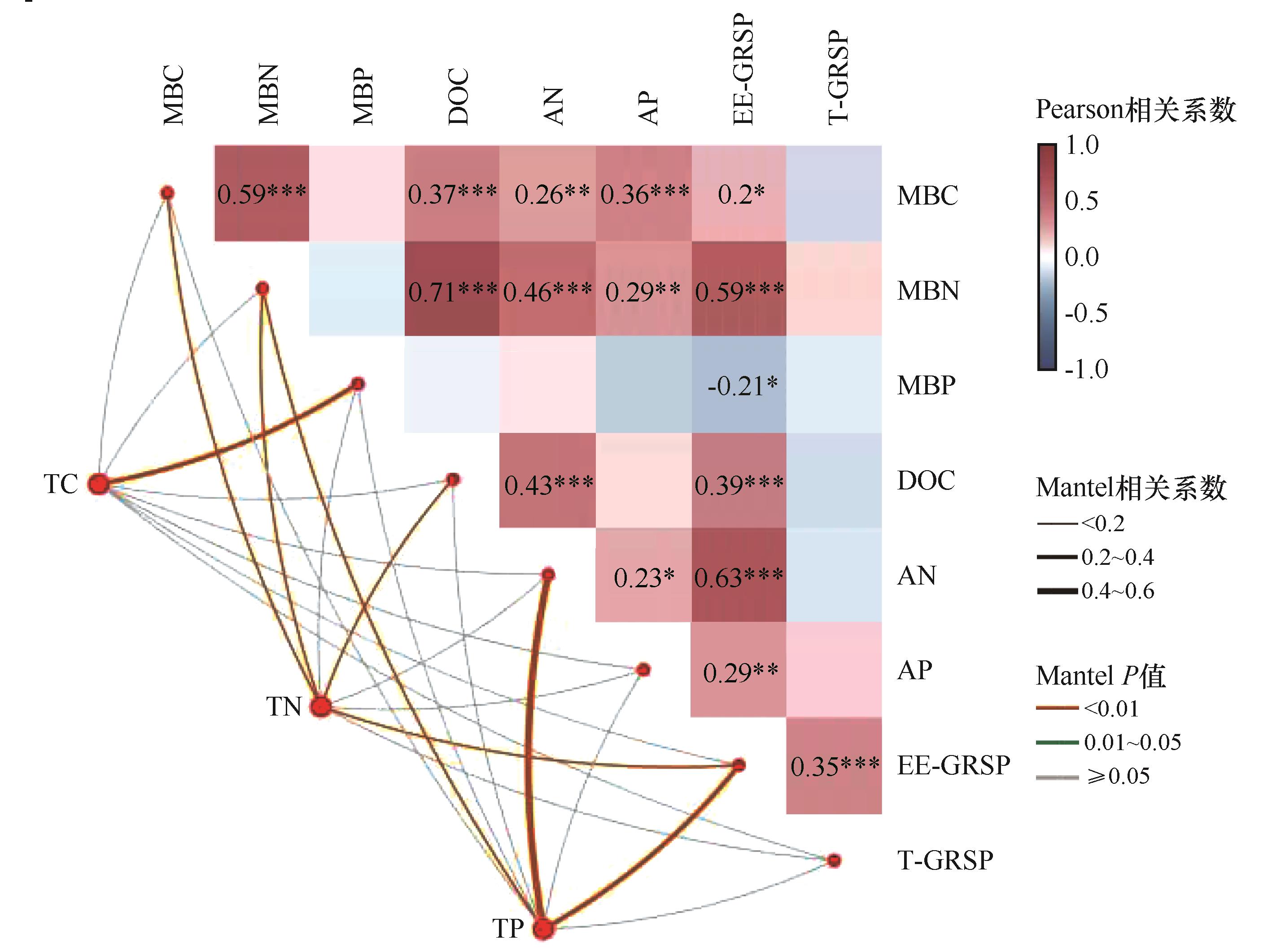
图4 苗木养分承载与土壤微生境相关因子的Mantel test相关分析注:图中TC、TN、TP分别代表苗木碳浓度、苗木氮浓度和苗木磷浓度。
Fig.4 Mantel test correlation analysis of nutrient carrying capacity of seedlings and soil microhabitat related factors
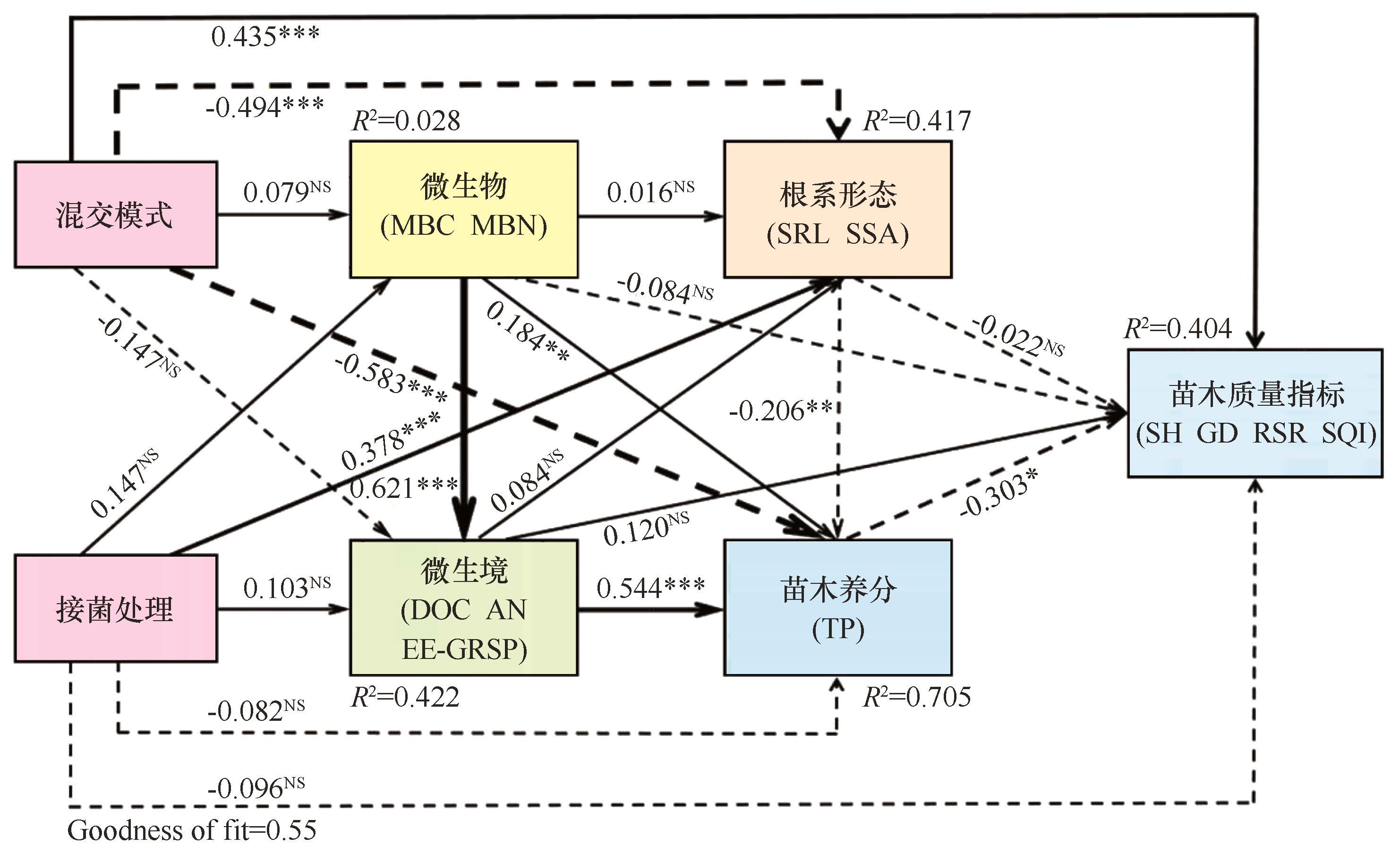
图5 基于偏最小二乘路径模型(PLS-PM)的苗木质量的驱动因子注:PLS-PM路径图显示了混交模式、接菌处理、微生物、微生境、根系形态、苗木养分对苗木质量指标影响的主要途径。实线和虚线箭头分别代表正和负效应。箭头粗细表示相关性的大小,靠近箭头的数字为路径系数。*、**和***分别表示P<0.05、P<0.01和P<0.001水平上显著
Fig.5 Drivers of seedling quality based on the partial least squares path model (PLS-PM)
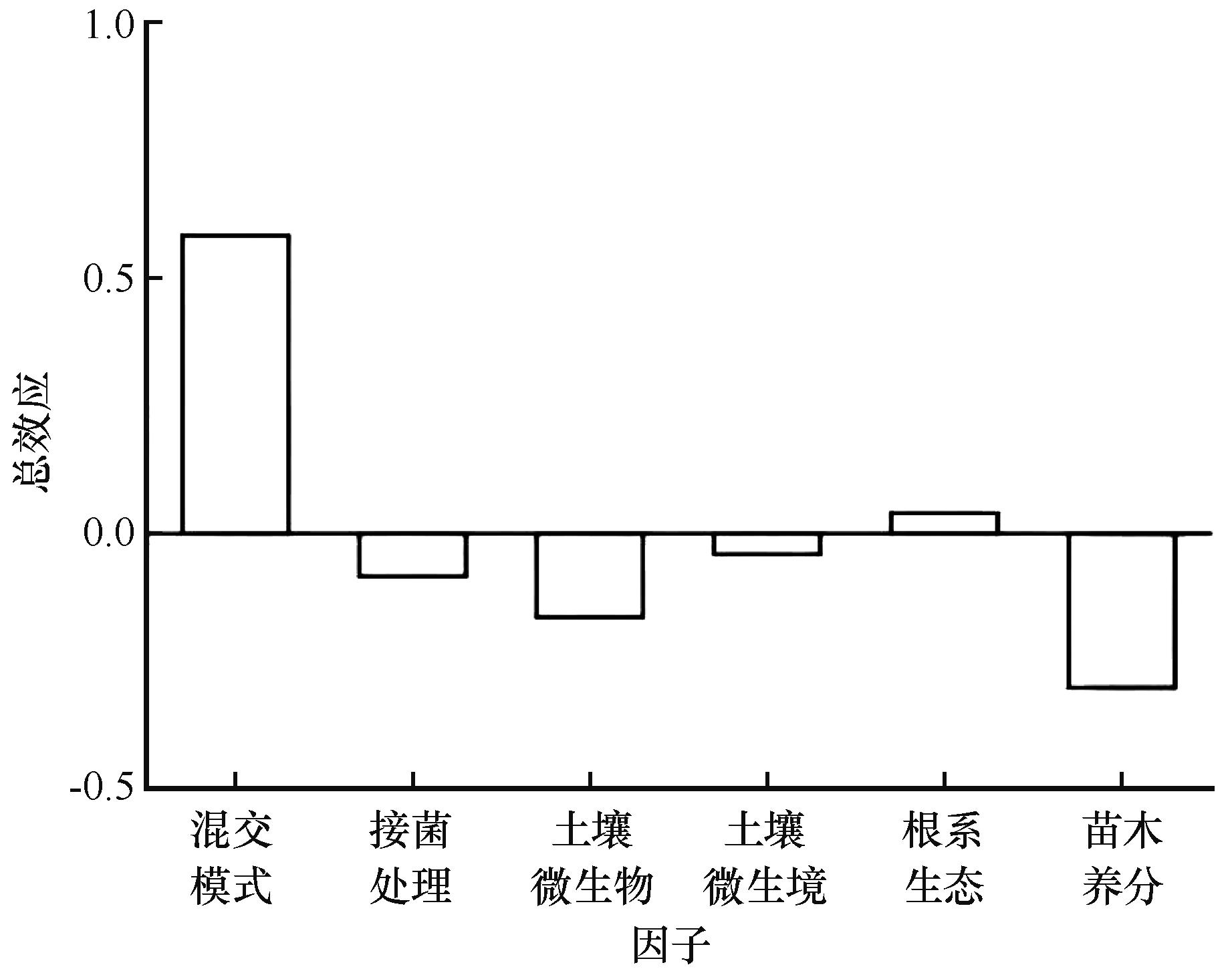
图6 影响苗木质量的总效应
Fig.6 Total effect on seedling quality
| [1] | 秦洁,司建华,贾冰,等.巴丹吉林沙漠植被群落特征与土壤水分关系研究[J].干旱区研究,2021,38(1):207-222. |
| [2] | 苏永红,冯起,司建华,等.土壤呼吸与测定方法研究进展[J].中国沙漠,2008,28(1):57-65. |
| [3] | 李建林,冯起,司建华.极端干旱区胡杨吸水根系的分布与模拟研究[J].干旱区地理,2008,31(1):97-101. |
| [4] | 崔光帅,罗天祥,梁尔源,等.干旱半干旱区灌丛对草本植物的促进作用研究进展[J].植物生态学报,2022,46(11):1321-1333. |
| [5] | 孔帅锋,吴小健,黄勇来,等.不同杉阔混交林生态系统碳储量及其分配特征[J/OL].森林与环境学报,1-8[2025-12-04]. |
| [6] | 张培,庞圣江,杨保国,等.不同混交模式对桉树林分生长、凋落物量和土壤养分的影响[J].西北农林科技大学学报(自然科学版),2021,49(2): 31-37. |
| [7] | Li Q C, Liu Z L, Jin G Z.Mixed forests provide higher levels of growth and yield than monocultures across a broad range of conditions[J].Forest Ecology and Management,2024,566:122083. |
| [8] | 李好,谭真平,桂鑫源,等.近40 年中国植被对复合干热事件的抵抗和恢复响应及其驱动因素分析[J/OL].生态学报,2025,45(24):1-19[2025-12-04]. |
| [9] | 侯晖,颜培轩,谢沁宓,等.贺兰山蒙古扁桃灌丛根际土壤AM真菌群落多样性特征研究[J].生态环境学报,2023,32(5):857-865. |
| [10] | Shan R X, Feng G X, Wang SP,et al.Ectomycorrhizal dominance increases temporal stability of productivity at multiple spatial scales across US forests[J].Global Change Biology, 2025,31(3):e70097. |
| [11] | Che Y, Jin G Z.Tree mycorrhizal strategies regulate diversity-productivity relationships across forest strata along soil fertility[J].Forest Ecosystems,2025,12:100289. |
| [12] | Liu S G, García-Palacios P, Tedersoo L,et al.Phylotype diversity within soil fungal functional groups drives ecosystem stability[J].Nature Ecology & Evolution,2022,6(7):900-909. |
| [13] | Yu Y Y, Ru J Y, Lei B H,et al.Distinct response patterns of soil micro-eukaryotic communities to early-season and late-season precipitation in a semiarid grassland[J].Soil Biology and Biochemistry,2024,194:109427. |
| [14] | 张国盛.干旱、半干旱地区乔灌木树种耐旱性及林地水分动态研究进展[J].中国沙漠,2000,20(4):363-368. |
| [15] | Smith SE, Smith FA.Roles of arbuscular mycorrhizas in plant nutrition and growth: new paradigms from cellular to ecosystem scales[J].Annual Review of Plant Biology,2011,62:227-250. |
| [16] | Fu W, Chen B D, Ma W,et al.Community response of arbuscular mycorrhizal fungi to extreme drought in a cold‐temperate grassland[J].New Phytologist,2022,234(6):2003-2017. |
| [17] | 蒙陈晨,张克闽,万吉鑫,等.退化草地原位土壤接种丛枝菌根真菌对黄花苜蓿抗旱性的影响[J/OL].草地学报,1-16[2025-12-04]. |
| [18] | Liu T Y, Hao L F, Bai S L,et al.Ecoenzymatic stoichiometry and microbial nutrient limitation of shrub rhizosphere soils in response to arbuscular mycorrhizal fungi inoculation[J].Journal of Soils and Sediments,2022,22:594-606. |
| [19] | 王曼,姜永孟,张世良,等.树种混交对侵蚀退化地马尾松林土壤酶活性和碳利用效率的影响[J].水土保持学报,2024,38(6):264-272. |
| [20] | 肖玉玲,胡雪,肖萌,等.毛竹纯林与混交经营中球囊霉素对土壤碳积累的贡献变化[J].东北林业大学学报,2025,53(11):114-123. |
| [21] | 刘鑫媛,李玥,魏子艳,等.土壤碳氮变化对细菌、真菌群落及其相互作用的影响[J].生物工程学报,2025,41(10):3701-3718. |
| [22] | 刘影,李疆枫,吴佳琪,等.干旱下草地植物糙隐子草根系和菌根真菌对土壤碳氮的影响[J].植物生态学报,2025,49(9):1388-1398. |
| [23] | 宰学明,郝振萍,赵辉,等.丛枝菌根化滨梅苗的根际微生态环境[J].林业科学,2014,50(1):41-48. |
| [24] | Ma Z Q, Guo D L, Xu X L,et al.Evolutionary history resolves global organization of root functional traits[J]. Nature,2018,555(7694):94-97. |
| [25] | 张中峰,张金池,周龙武,等.丛枝菌根真菌对石漠化地区造林苗木生长的影响[J].生态学杂志,2018,37(10):2927-2934. |
| [26] | 全民,杜昕鹏,毕银丽.露天矿排土场接种AMF对3种植物根系发育与土壤团聚体稳定性的影响[J].水土保持研究,2024,31(3):187-194. |
| [27] | 祁金玉,邓继峰,尹大川,等.外生菌根菌对油松幼苗抗氧化酶活性及根系构型的影响[J].生态学报,2019,39(8):2826-2832. |
| [28] | 杨阳,孙文泰,赵明新,等.果园土壤微生物与理化性质互作机制及生态功能研究进展[J].果树学报,2025,42(9):2164-2178. |
| [29] | 周雨婷,肖江,黄欣瑞,等.植物根系构型对花岗岩弃渣土壤有机碳组分的影响[J].植物生态学报,2025,49(9):1485-1497. |
| [30] | 韩小美,黄则月,程飞,等.望天树人工林根际土壤理化性质及微生物群落特征[J].应用生态学报,2020,31(10):3365-3375. |
| [31] | 王光州,申建波,张俊伶,等.植物-土壤反馈驱动的土壤健康机制与调控策略[J/OL].土壤学报,1-15[2025-12-04]. |
| [1] | 童永尚, 陈月芳, 李政升, 张生楹, 李玉乐, 牛克昌, 巴雅尔塔, 段沛琪. 新疆伊犁半干旱区光伏电站植被-土壤耦合特性[J]. 中国沙漠, 2026, 46(5): 126-135. |
| [2] | 王世宇, 王雪松. 2001—2020年中国北方干旱半干旱区土壤风蚀的时空变化及驱动因素[J]. 中国沙漠, 2026, 46(2): 164-176. |
| [3] | 安迪, 张勃, 张雪盈, 伍哲希. 密集生态干预对中国干旱半干旱区植被生产力的影响[J]. 中国沙漠, 2026, 46(2): 277-287. |
| [4] | 王海仙, 张勇勇, 康文蓉, 肖建华, 王淑敏, 魏淑娥, 吴绍雄. 干旱半干旱区典型植被类型蒸散比及土壤水分阈值[J]. 中国沙漠, 2025, 45(6): 289-299. |
| [5] | 牟晓明, 黑婷, 贾荣亮, 王旭洋, 陈国鹏, 李玉强. 治沙模式对科尔沁沙地植被和生物土壤结皮的短期影响[J]. 中国沙漠, 2025, 45(4): 118-129. |
| [6] | 卢建男, 李玉强, 赵学勇, 李宝成, 王旭洋, 张蕊. 半干旱区典型沙地生态环境演变特征及沙漠化防治建议[J]. 中国沙漠, 2024, 44(4): 284-292. |
| [7] | 程姗岭, 于海鹏, 任钰, 周洁, 罗红羽, 刘晨汐, 龚咏琪. 中国干旱半干旱区气候异常影响机理研究进展[J]. 中国沙漠, 2023, 43(3): 21-35. |
| [8] | 张越, 陈思宇, 毕鸿儒, 曹佳慧, 罗源, 龚咏琪, 陈渔. 干旱半干旱区农田土壤风蚀特征及参数化研究进展[J]. 中国沙漠, 2022, 42(3): 105-117. |
| [9] | 胡延斌, 张强, 肖国举, 仇正跻, 李永平, 郭占强. 中国半干旱区农田土壤碳、氮、磷含量对玉米生产的影响[J]. 中国沙漠, 2022, 42(3): 261-273. |
| [10] | 苏天燕, 刘子涵, 丛安琪, 毛伟, 杨秋. 地下水埋深对半干旱区典型植物群落土壤酶活性的影响[J]. 中国沙漠, 2021, 41(4): 185-194. |
| [11] | 董硕, 阿拉木萨, 马群, 刘志民. 丛枝菌根真菌在荒漠化防治中的作用及应用潜力[J]. 中国沙漠, 2021, 41(4): 70-78. |
| [12] | 王同亮, 马绍休, 高扬, 宫毓来, 安志山. 小波包分解与多个机器学习模型耦合在风速预报中的对比[J]. 中国沙漠, 2021, 41(2): 38-50. |
| [13] | 常学尚, 常国乔. 干旱半干旱区土壤水分研究进展[J]. 中国沙漠, 2021, 41(1): 156-163. |
| [14] | 黑维高, 詹瑾, 韩丹, 杨红玲, 李玉霖. 科尔沁沙地2种优势固沙灌木的相容性生物量模型[J]. 中国沙漠, 2019, 39(5): 193-199. |
| [15] | 张明艳, 贾昕, 查天山, 秦树高, 吴雅娟, 任才. 油蒿(Artemisia ordosica)光系统Ⅱ光化学效率对去除降雨的响应[J]. 中国沙漠, 2017, 37(3): 475-482. |
| 阅读次数 | ||||||
|
全文 |
|
|||||
|
摘要 |
|
|||||
©2018中国沙漠 编辑部
地址: 兰州市天水中路8号 (730000)
电话:0931-8267545
Email:caiedit@lzb.ac.cn;desert@lzb.ac.cn


 甘公网安备 62010202000688号